
What Is Search Arbitrage? How Search Feed Arbitrage Works in 2026
There are different ways of traffic monetization, and one of them is called search feed arbitrage (SFA). Still unfamiliar with it? Knowing how difficult it is to get the entire picture from scattered sources of information, we have prepared an ultimate guide to answer each and every question. It covers all the essentials of search arbitrage for beginners: how search arbitrage works, the best traffic sources, feed providers, and pro tips for long-term profitability of arbitrage marketers and mediabuyers.
EVADAV TRAFFIC GROUP works with search feed arbitrage on a daily basis and goes far beyond basic traffic tools. With our own feeds, in-house development, and a team of expert mediabuyers backed by 20 years of AdTech experience, we build stable, scalable search arbitrage setups focused on long-term profitability, not quick wins. We’re always open to partnerships and collaborations, and our mediabuying team keeps growing day by day (most likely, you will find our open positions here).
Get cozy and let’s plunge into the realm of search feed arbitrage – this guide won’t leave your questions unanswered.
Already know enough about search arbitrage and media buying? Explore our Media Buyer vacancy and apply!
How search arbitrage works
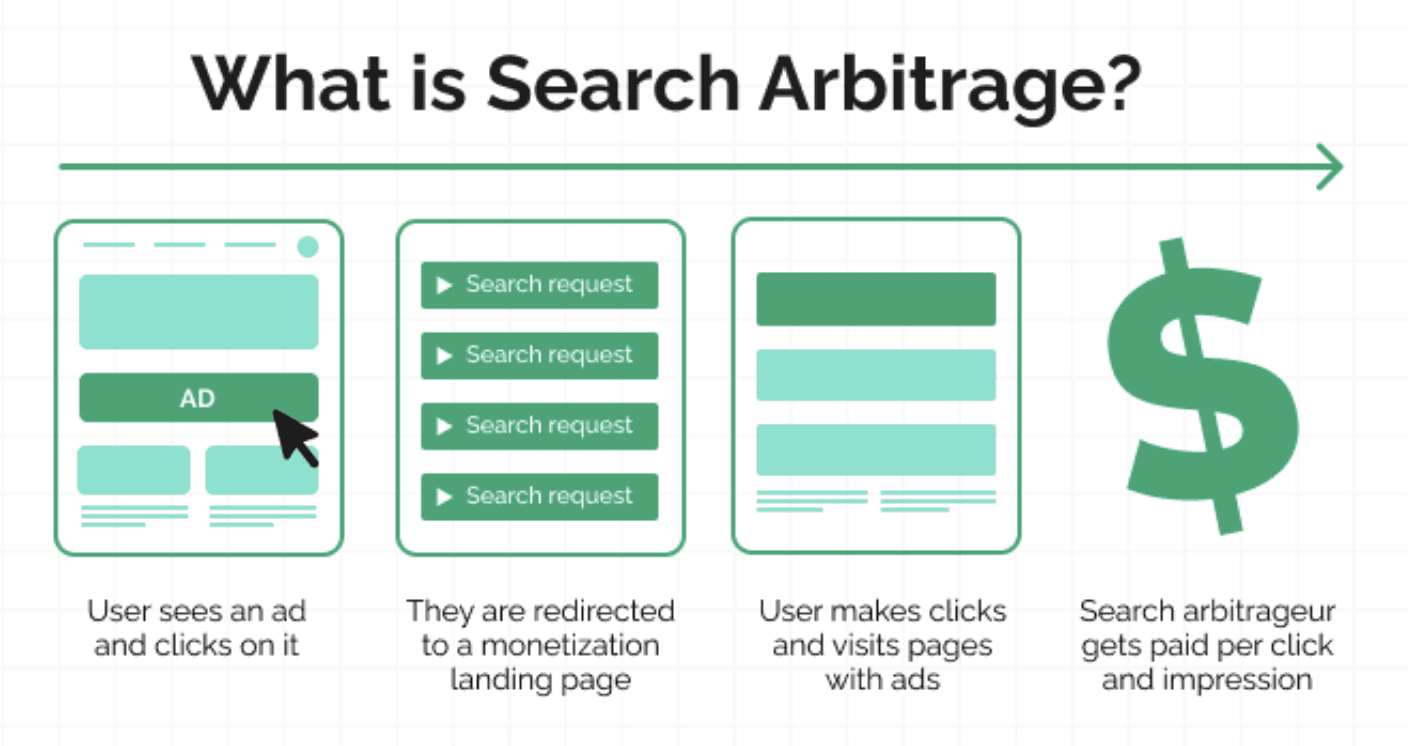
Search arbitrage involves mediabuyers purchasing traffic from social networks and native placements, then sending it to specific keyword result pages and search feeds on Google, Yahoo, and Bing.
In simple terms, a search arbitrageur (mediabuyer) purchases visitors from one place and monetizes them in another. A user, in their turn:
-
First clicks on an ad.
-
Lands on a page with relevant search queries.
-
Clicks a sponsored result.
That second click is what generates revenue. To make this process work, arbitrage relies on special “search feeds” provided by Google, Bing, or Yahoo through feed partners. These feeds deliver search-style ads based on keywords preset in search arbitrage campaigns:
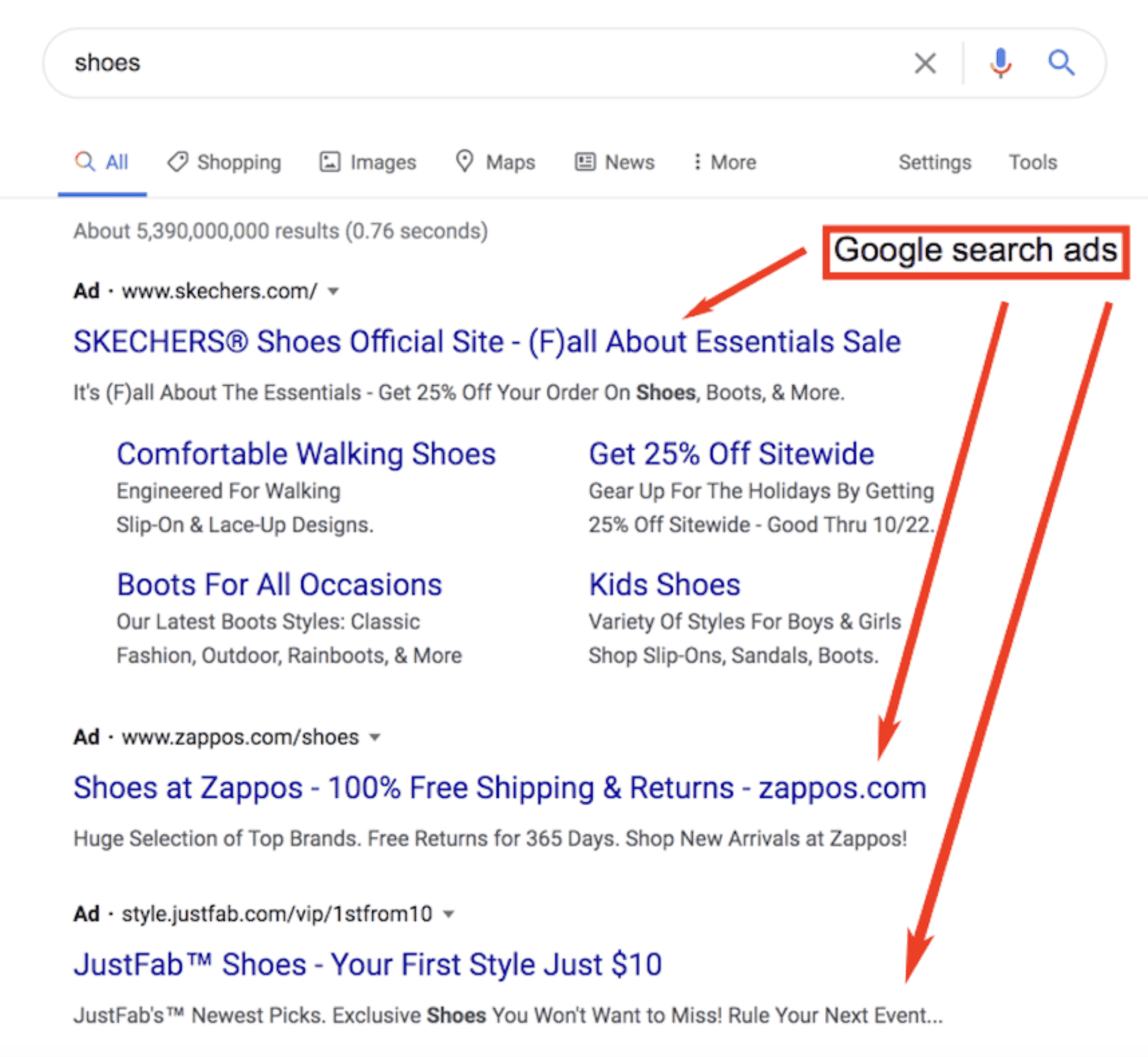
Google Search Ads
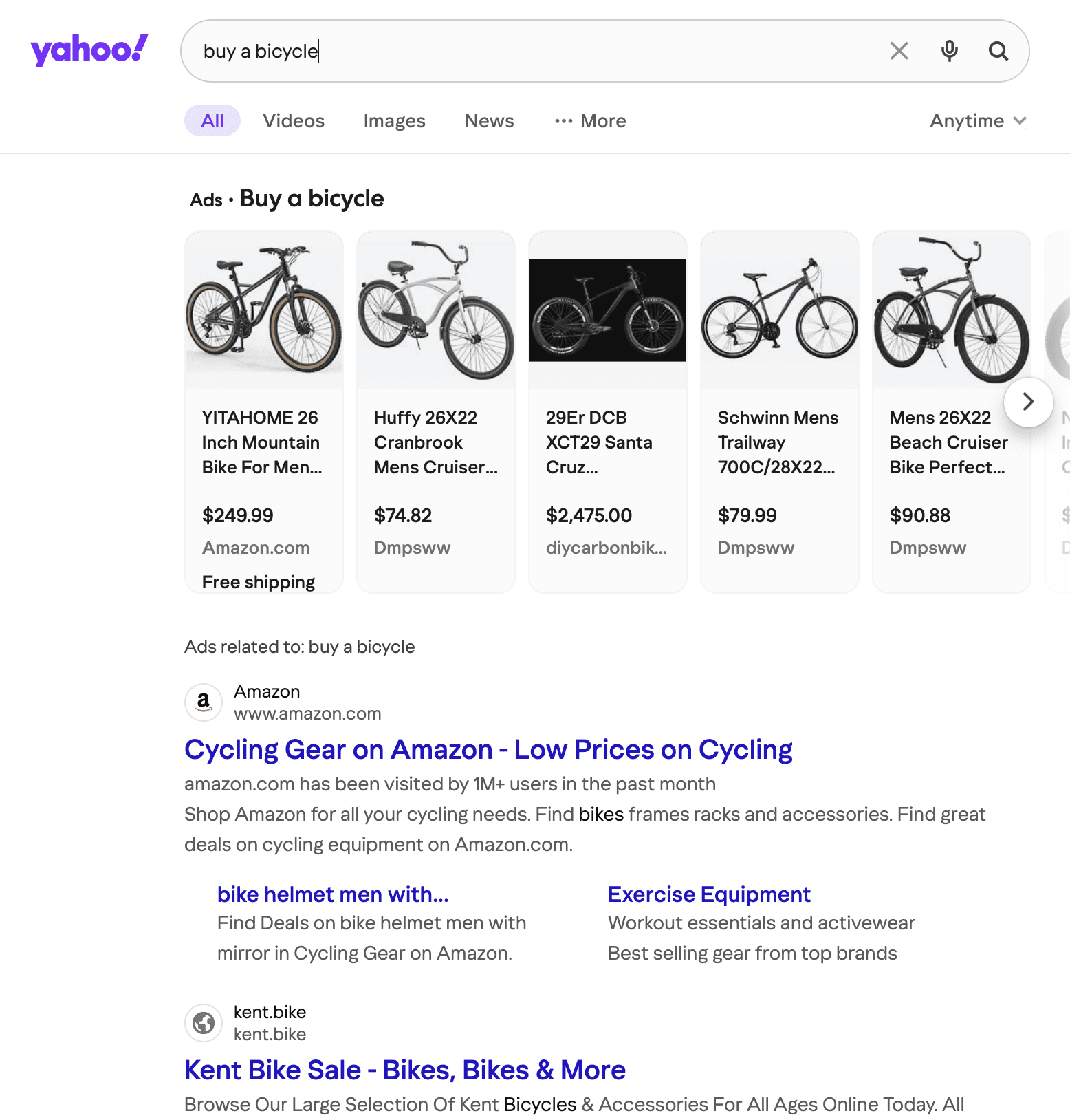
Yahoo Search Ads
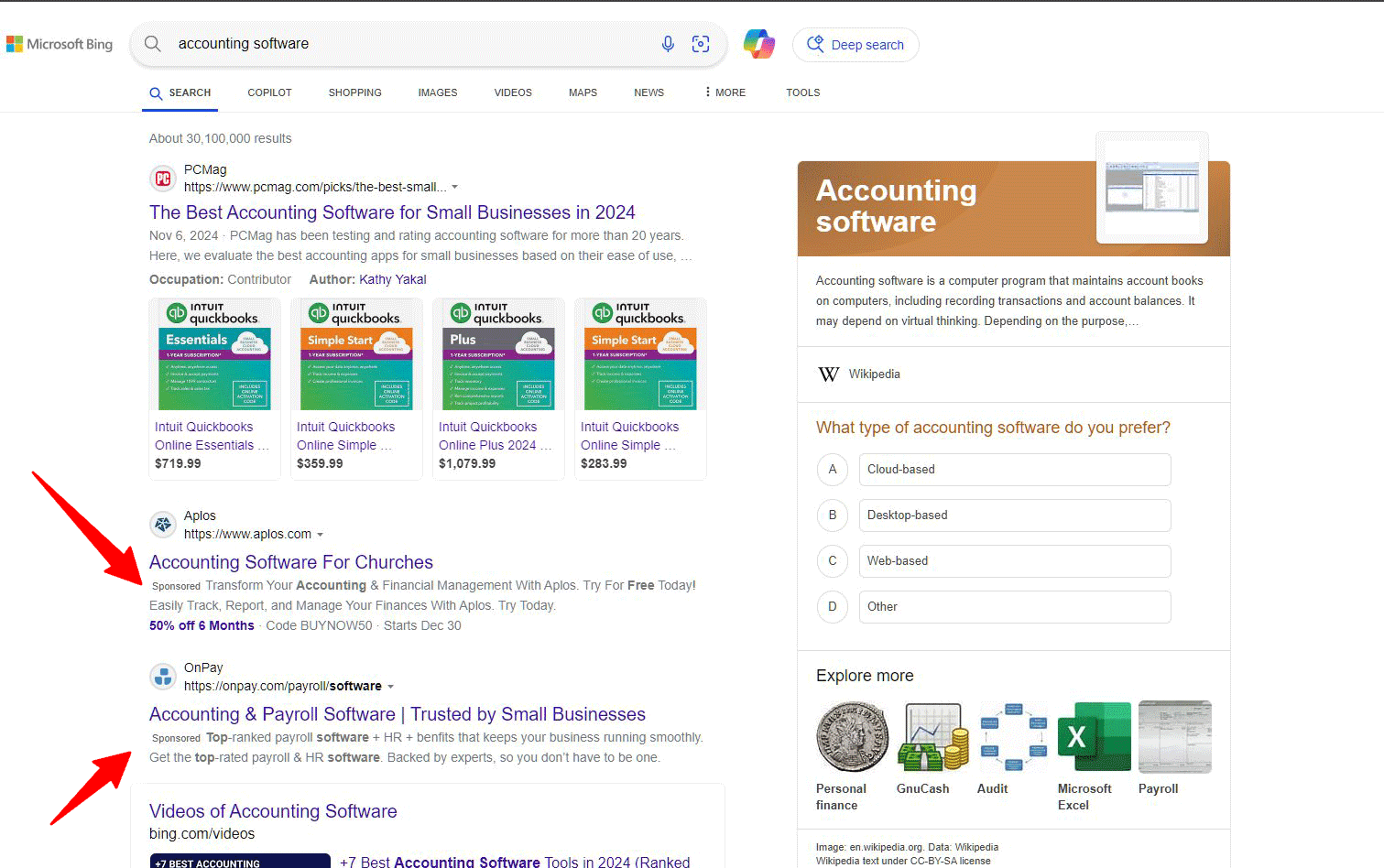
Bing Search Ads
When users reach the target page, the arbitrageur earns a share of the revenue generated from these clicks. After deducting the cost of traffic acquisition, the difference between the revenue from clicks and the initial cost is the profit. Hence, the arbitrageur benefits from the spread between the low-cost traffic and high-value ads placed on the page. Payments are made on the platform (ad network) where the arbitrageur launches ad campaigns.
🔎Read more: What Makes Agency a Leader in Search Arbitrage
Traffic arbitrage vs Search arbitrage: What’s the difference?
Traffic arbitrage involves buying traffic from low-cost sources and redirecting it to higher-paying offers, often using display ads or social media. Search arbitrage specifically focuses on purchasing traffic from search engines, redirecting it to search result pages or feeds, and monetizing through click-based ads on relevant keywords.
Benefits of search arbitrage:
-
Scalable profits. The system can manage high traffic levels if it is configured and optimized. As long as a search arbitrageur can sustain a consistent flow of visitors and scale monetization strategies, it’s possible to expand reach and potential income.
-
Minimal efforts for content creation. Search feed arbitrage mostly depends on traffic redirection, not production of information. This reduces the need for continuous content creation, allowing arbitrage marketers to concentrate more on improving traffic sources and revenue strategies.
Now with search arbitrage explained, it’s time to mention that its efficiency can differ depending on the number of clicks that users make – click flows. Let’s take a closer look at them.
Click flow models
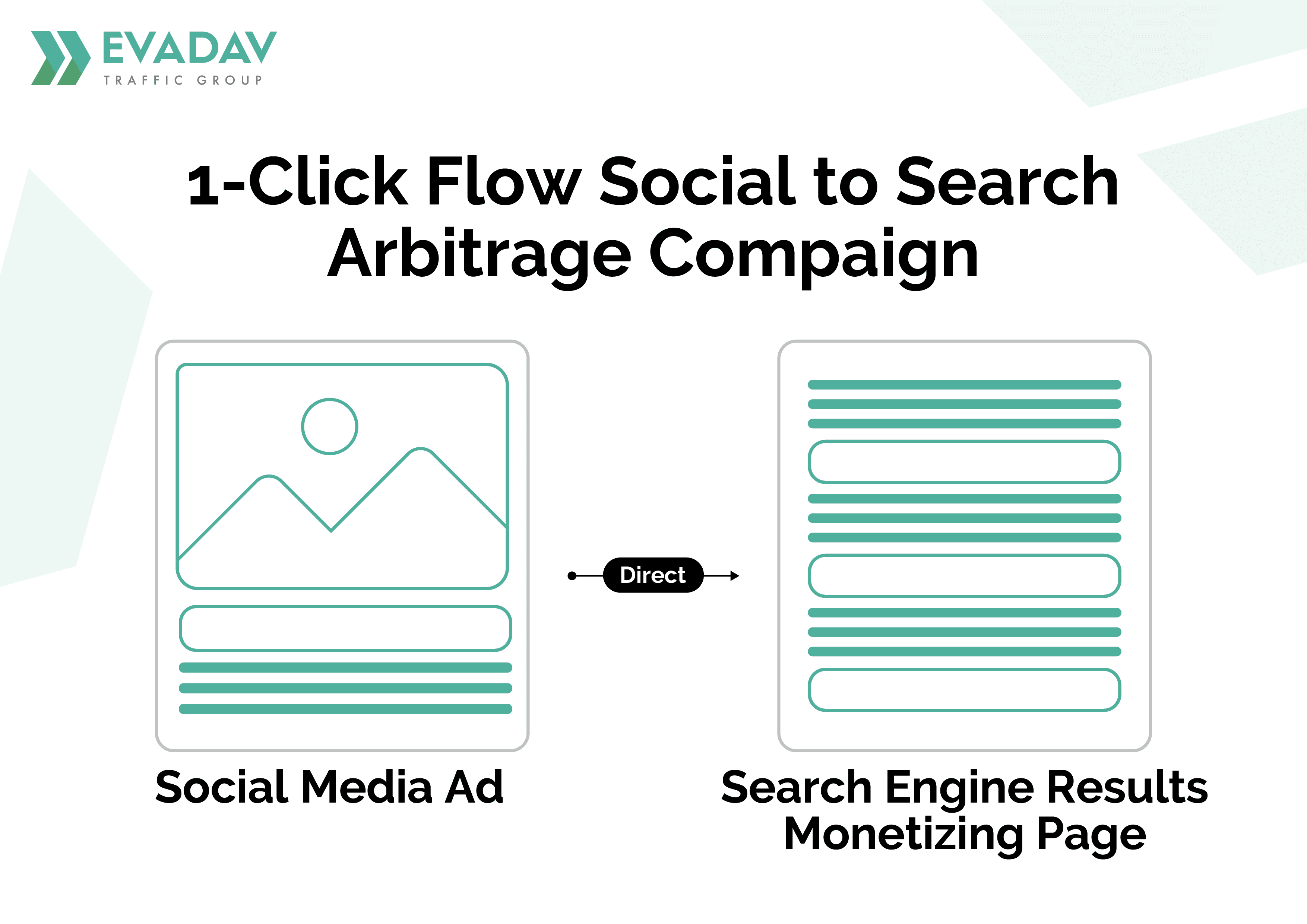
1-Click Flow is the simplest: a user clicks an ad and immediately sees sponsored results, most often on Yahoo or Bing feeds. This model typically relies on high-converting offers or landing pages with minimal friction for the user, making it easy for them to take the desired action on the first click.
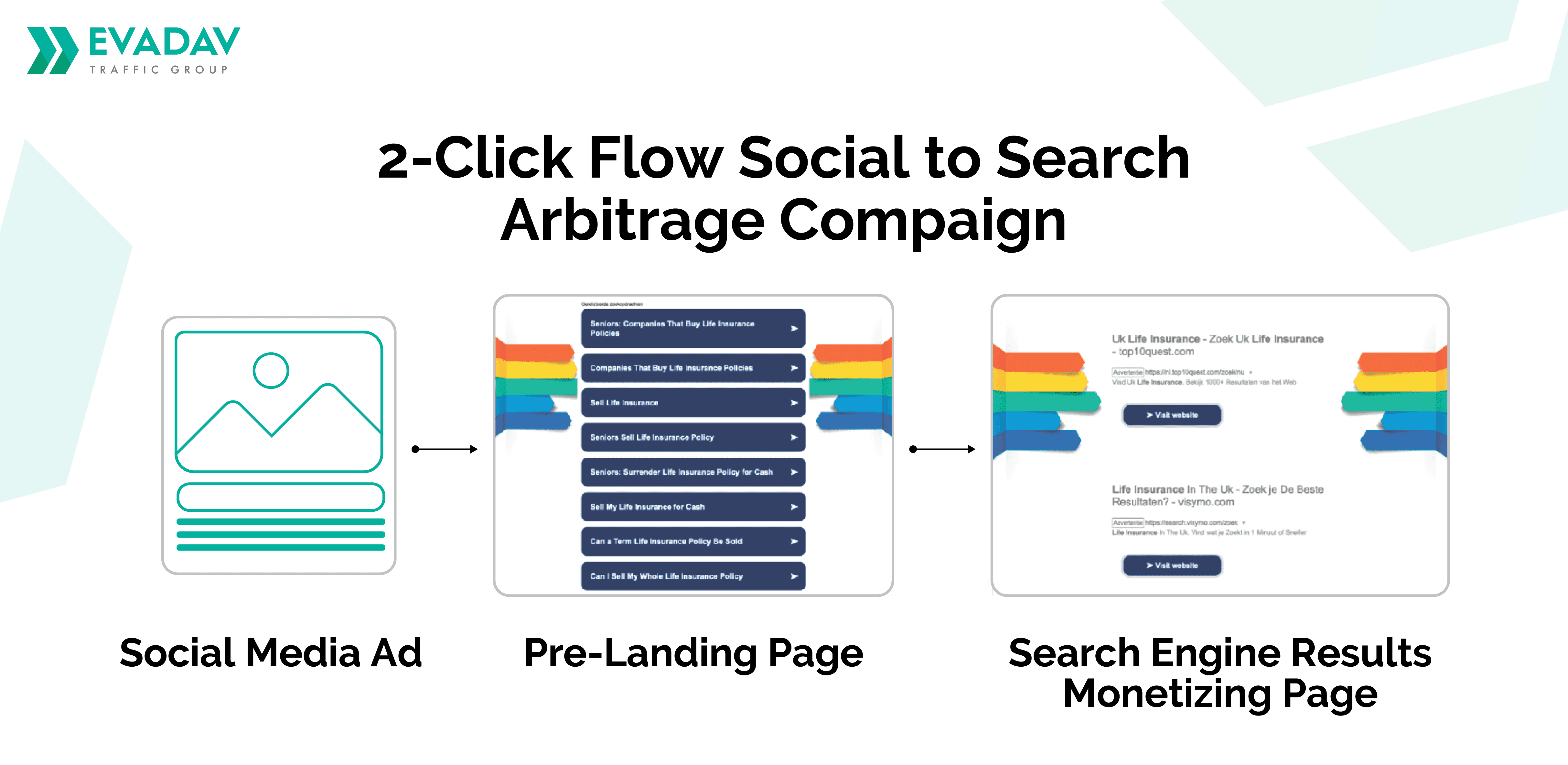
2-Click Flow, the most popular for Google, sends the user first to a page with keyword buttons. After choosing a keyword, they proceed to a pre-landing page that redirects them to the advertiser. The goal here is to engage the user more deeply by providing additional value or information, increasing the likelihood of conversion on the second click. This model works well when the offer requires more explanation or when additional trust-building content is needed before the final conversion, such as sign-ups, purchases, or lead submissions.
AFD Feed
RSOC Feed
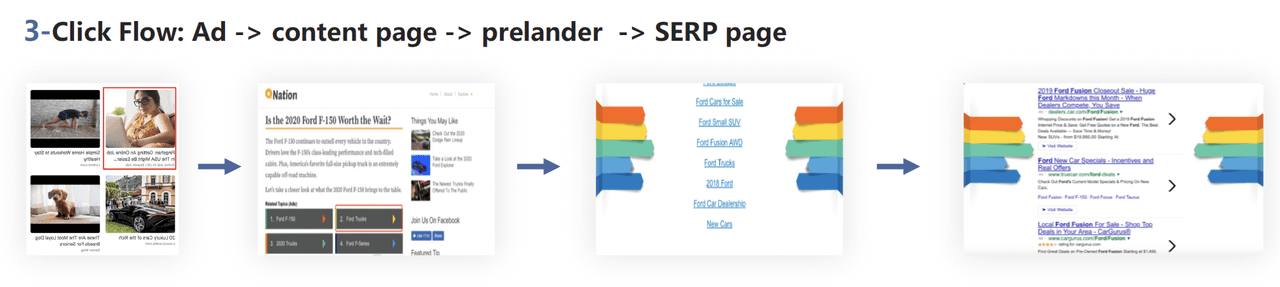
3-Click Flow adds an extra step: the user first reads a short article or sees a themed content page, then clicks a search block within it, and goes through a pre-land before reaching the advertiser. All three models follow the same idea, but the number of steps changes depending on how warm and engaged the user becomes before clicking the final sponsored link. The 3-click flow is most commonly used on Yahoo.
What is the role of mediabuyers in that?
In the context of search feed arbitrage, marketers manage the entire process of buying low-cost traffic and turning it into profitable search-feed clicks. They choose the best traffic sources for arbitrage, set up campaigns, test creatives, and pick keyword themes that produce the highest earnings per click. Their job is to analyze performance daily, adjust budgets, and find out how to scale search arbitrage campaigns that show positive results. In short, they act as the operators who make search arbitrage profitable through constant optimization and experimentation.
👉 Become a media buyer at EVADAV
Types of Traffic Arbitrage
Let’s check out the classification of search arbitrage strategies depending on the source of traffic.
Search to Search

Source: Beyond The Paid
In this type of traffic arbitrage, marketers purchase paid search ads (e.g., Google Ads) targeting specific keywords and direct that traffic to their own landing pages or offers. The goal is to buy traffic at a low cost and monetize it through various means, such as affiliate offers, product sales, or lead generation. Success hinges on selecting high-converting keywords and maintaining a low cost per click (CPC) to achieve profitability.
Native to Search

Source: Brax
Native to search arbitrage leverages native advertising (e.g., sponsored content or in-feed ads) to drive traffic to search engine results or specific search-related landing pages. When building a native ad arbitrage strategy, ensure that ads blend seamlessly into the surrounding content, increasing user engagement and trust.
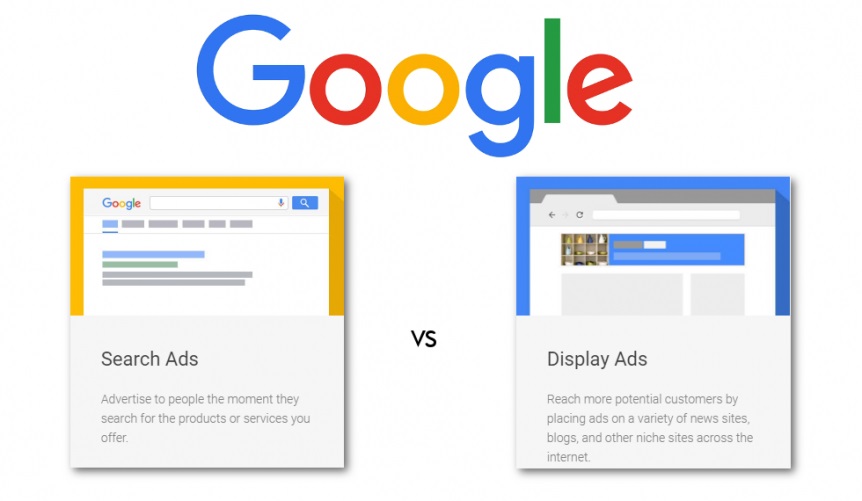
Display to Search
In this case, an arbitrage marketer buys banner traffic and then sends it to related search results. Display traffic is usually more affordable, so it’s a great option for starters in search feed arbitrage.
Social to Search

Source: Common Thread Collective
In social to search arbitrage, marketers purchase social media ads (e.g., Facebook, Instagram, TikTok) to drive users to search engines or paid search results. This approach often uses targeted social media campaigns to spark curiosity or interest, prompting users to search for more details or to find related offers.
Referral Traffic
Backlinks, guest articles, and partnerships with other websites serve as the main sources of this traffic. Referral traffic can be of pretty high quality because it comes from reliable sources and engaged audiences. It is usually generated from parking domains in two kinds of flows:
-
D2S (Direct-to-Search). Parking domains generate referral traffic and income by sending users straight to a search engine results page with advertisements.
-
N2S (Navigation-to-Search). Before directing users to the search results page, parking domains first send them to an intermediate landing page. This offers more alternatives or context.
In Google, domain traffic is generated and monetized through the AFD model – let’s dwell upon it in detail.
RSOC vs AFD
When working with Google Adsense, you can face two kinds of search arbitrage: RSOC (Related Search On Content) and AFD (Ads for Domains) – let’s outline the major differences between the two.
AFD was Google's older way to monetize parked domains with contextual ads. The quality of traffic obtained this way was below average, so Google is discontinuing this monetization model.
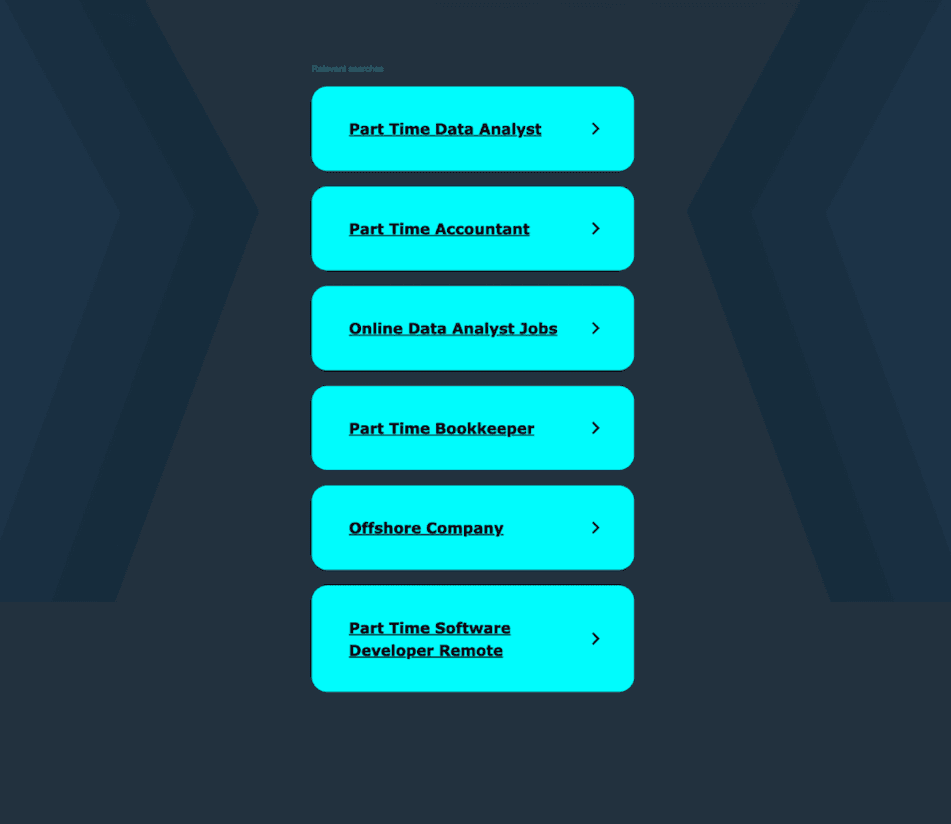
AFD
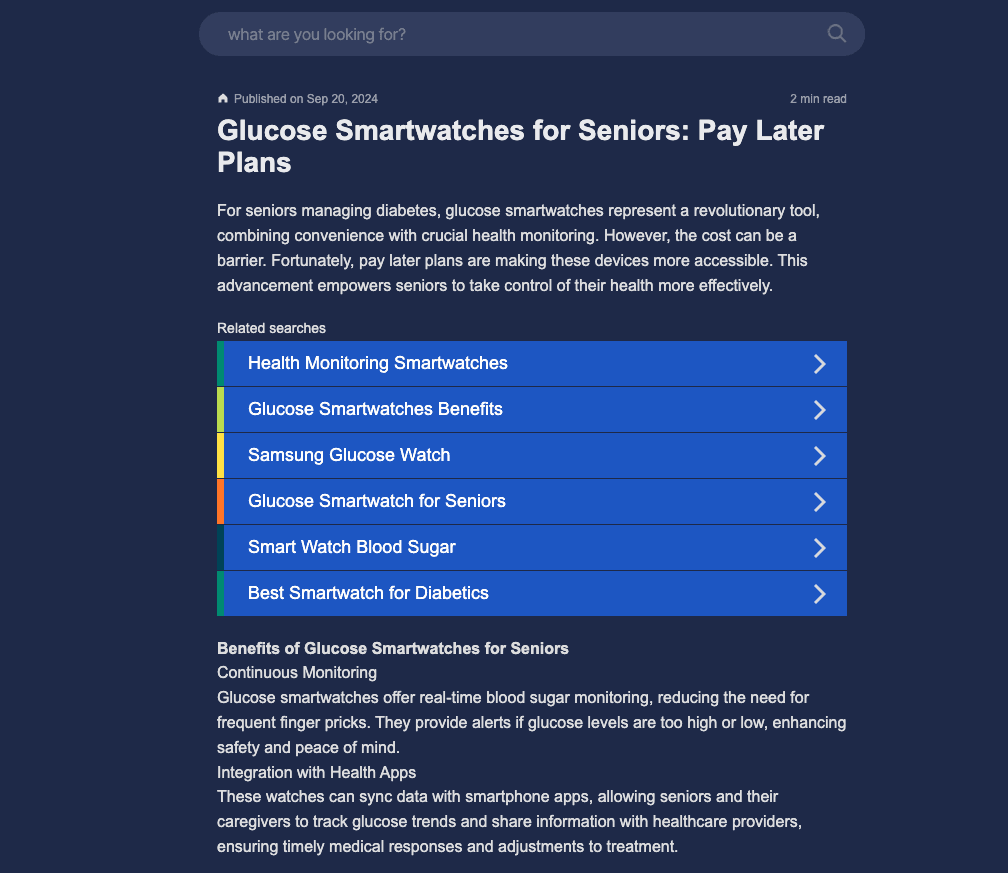
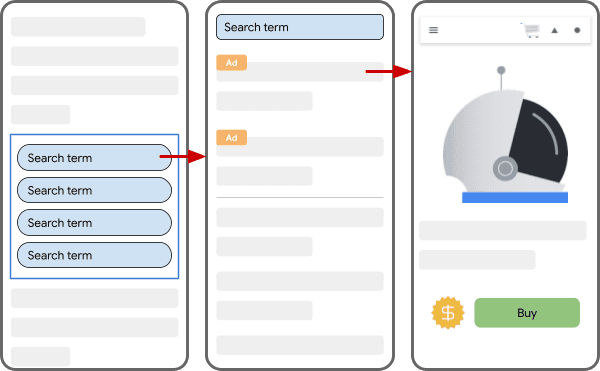
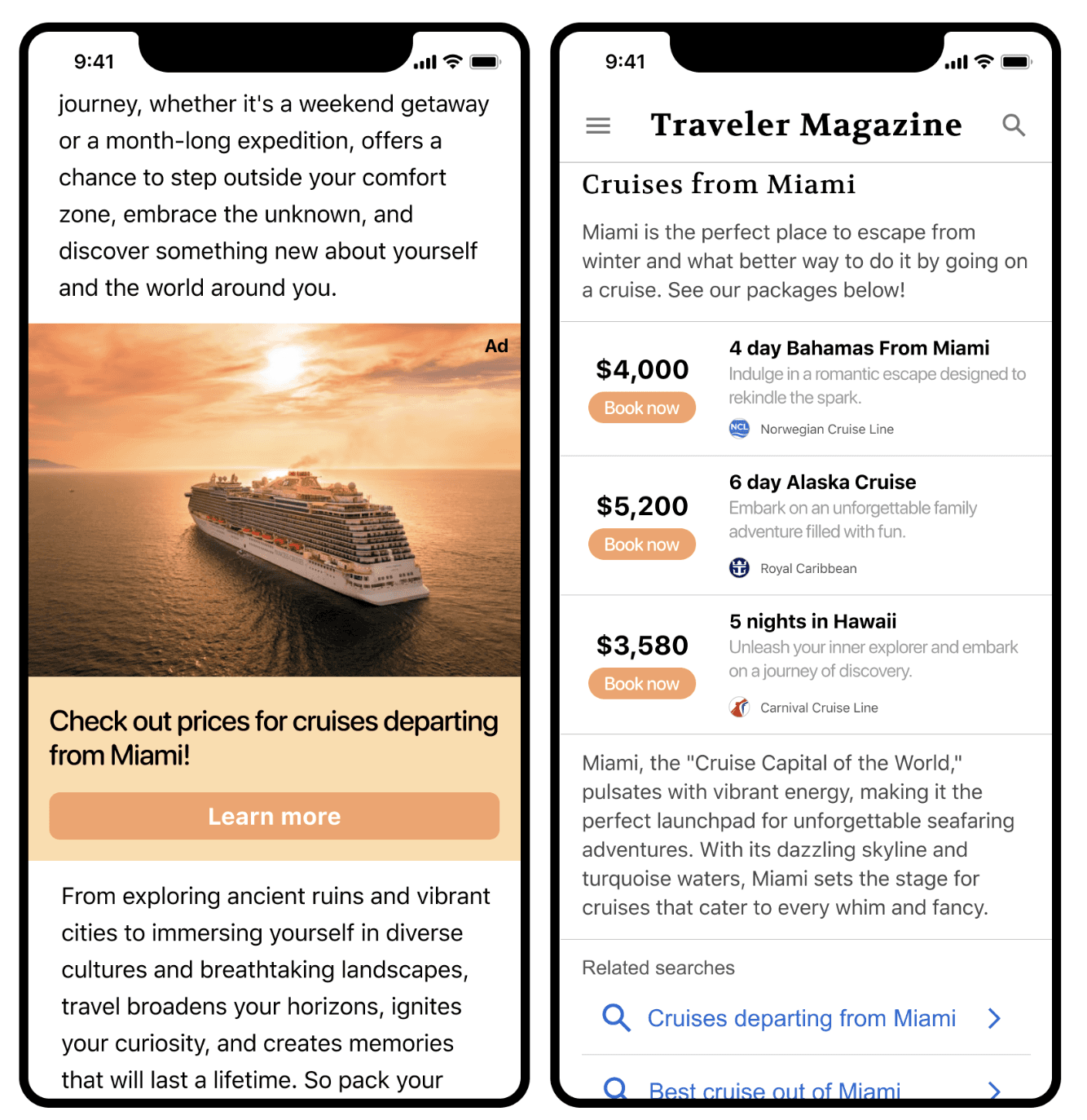
RSOC is a newer, content-integrated feature within AdSense for Search (AFS) service ecosystem. This is a refined search arbitrage model that often yields higher quality traffic compared to traditional parked domain monetization. In the RSOC monetization model, related search units are positioned directly into helpful, topic-focused material. Users may narrow their intent and click into sponsored search results using this feed-based method, which displays "related searches" inside or alongside content.
Here’s an RSOC funnel illustrated by Google. For more details, you can read their guide on related search content.
Source: Google
Source: Google
What are Search Feed Providers?
Search Feed Providers are platforms that syndicate a stream of search queries, keywords, or relevant data from Google to mediabuyers and partners. These services aggregate and categorize search data, offering insights into trending keywords, user intent, and search patterns. Arbitrageurs can leverage these feeds to optimize their paid search campaigns: identify high-performing keywords, refine targeting, and adjust bids to improve campaign performance.
For successful search feed monetization, EVADAV recommends working with the following providers:
|
AdMedia provides XML feeds that allow users to benefit from popular search engines like Yahoo and Google as well as highly-ranked shopping sites. |
|
|
A performance ad network that provides Google, Bing, and Yahoo Search Feeds, supporting Native, Social, Search, and Display search arbitrage models. |
|
|
This is a major search feed provider for traffic monetization, known for its long industry experience and Tier 1 ad network partnerships. Works with major search engines (Google, Bing, Yahoo) and top advertisers. Offers access to different feed types, including AFD and RSOC. |
|
|
Airfind operates in the search feed arbitrage (RSOC) ecosystem by delivering ad feeds from major search engines like Google, Bing, and Yahoo to partners who drive traffic to them. It delivers 2 bln monthly ad impressions and offers diverse ad solutions include Native Ads, Video Ads, and Sponsored Search Ads. |
|
|
A search directory for finding the best resources across multiple industries and topics. Suitable for RSOC ads, covers the topics of lifestyle, travel, art, entertainment, and shopping. |
|
|
A media publisher that provides traffic monetization services. While operating worldwide in 150+ countries, it mostly focuses on the USA market. |
|
|
Ask Media Group (IAC) |
Ask Media Group provides search feeds (organic and paid listings) to publishers. It acts as a partner for syndicating search results and is often used by mediabuyers looking for alternatives to direct Google/Bing traffic. |
|
Axelerad serves search feeds from direct providers and features 150+ search partners, working with Google, Yahoo, and Microsoft. Accepts traffic from TikTok, Facebook, Snapchat, Pinterest, Native, Display, and Type-in. |
|
|
A digital advertising platform based on technological innovation. It aggregates advertising budget sources, such as SSP, DSP, and ADX. They provide the service for managing the entire process of search ads based on the BeesAds intelligent advertising platform. |
|
|
The platform aggregates articles that focus on providing budget-friendly solutions and informative content across various sectors including finance, health, and technology. |
|
|
BidBerry acquires global traffic from top-tier sources – Google Ads, Facebook, TikTok, Taboola, Bing Ads, Outbrain and many others. Suitable for working with Search, Display, Social and Native search arbitrage. |
|
|
A digital marketing agency providing services for Paid Advertising and Media Planning. Works with Google, Yahoo, Bing, Taboola, Facebook and others. Provides comprehensive tools for ampaign ROI monitoring and reporting. |
|
|
It uses search feed providers like Bing Ads for its sites in syndication deals, while also utilizing content recommendation platforms like Taboola for its feeds, aiming to monetize user traffic with relevant search results and content. |
|
|
One of 4 official Yahoo’s feed distributors. Helps with monetizing premium publishers coupled with strategic partnerships in the online and mobile advertising space. |
|
|
ExplorAds is recognized as a specialized search feed provider, particularly known for being an early adopter and major player in RSOC. It acts as a bridge for publishers and mediabuyers looking to monetize traffic via search feeds from major engines like Google, Yahoo, and Bing. |
|
|
The world’s largest search engine that enables search arbitrage funnels through AFD (Adsense For Domains) and RSOC (Relates Search For Content). Google Display Network counts over 2 mln websites, apps and publishers. |
|
|
Hive Media Group reaches more than 50 mln visitors monthly through its owned and operated web properties and third-party partnerships. It leverages AI-optimized campaign management system that operates across dozens of native, social, and programmatic ad networks. |
|
|
Serving up billions of images every month, Image Advantage is the partner of choice for some of the world's leading web publishers worldwide, including Yahoo!, Google, Miva, and other industry-leaders. |
|
|
A mobile advertising platform that specializes in in-app ads, offering access to a vast audience through engaging ad formats, including banners, interstitial, and video ads. |
|
|
Intango search feed provider is recognized for providing RSOC feeds, which allow advertisers to monetize traffic via search-based ads, acting as an alternative to Google AFD. It also supports work with Yahoo and Bing search terms. |
|
|
A global leader in advertising technologies that utilizes advanced Machine Learning and AI to optimize and monetize digital content. It runs a a metadata-search engine, which aggregates search results from different engines. It also displays sponsored links originating from the advertising network of Google (Google AdWords / Adsense), on the pages where the search results are displayed. |
|
|
This is an AI-driven advertising technology provider and a recognized partner for search feed solutions, particularly in the context of Related Search for Content (RSOC). It has recently leveraged AI-driven instruments for campaign management and optimization. |
|
|
This is a data-driven performance marketing technology company that provides traffic monetization solutions for advertisers and publishers, featuring a proprietary AI-Powered Data Engine. Their reach is 3,000+ direct advertisers and 8,000+ subscribed publisher sites |
|
|
Kueez monetizing suite provides a well-performing RTB solution for programmatic advertising that combines cutting-edge tools and innovations. The platform claims to have 400+ publishing partners and 10k+ monetized domains. |
|
|
Maximizer is 100% optimized for RSOC, delivering faster, smarter, and more efficient feed and keyword optimization. It features Advanced Feed Optimization (automatically directs traffic to the best-performing RSOC feed for maximum monetization) and exclusive RSOC feeds. |
|
|
Media.net connects publishers to high-quality advertisers through its partnership with Yahoo and Bing, supporting display-to-search and search-to-search formats and driving better monetization potential. |
|
|
Money Media Group (MMG) |
Money Media Group owns and operates a network of consumer and small business finance websites in the UK, the USA and Australia. They utilise Search Engine Marketing to collect high intent audiences in an increasingly competitive marketplace. |
|
An AI agency with tools and software for search arbitrage industry. Nimble’s web search agents turn the live web into structured, queryable data that could power custom search feeds for arbitrage setups. |
|
|
OBMedia is a recognized player in the digital advertising industry, specializing as a search feed provider and monetization platform, frequently used in "social-to-search arbitrage" strategies. They connect publishers with major search advertising markets to monetize traffic through search feeds. |
|
|
A social engagement platform that works with publishers to bring conversations back from social networks to publisher sites. Hosts over 150 mln monthly active users and 5000+ publishers. |
|
|
Peak Ventures is an agile monetization engine that provides proprietary solutions for publishers and advertisers (AI and predictive performance optimization). |
|
|
Perion allows publishers to leverage search, ads, shopping, and news to monetize intent on their website, extension, app, or any other digital property. It partners with Bing and Yahoo. |
|
|
A data-driven publishing platform based on real-time data analytics and predictions, steering the right users to the right content. |
|
|
A platform for automated digital media buying experience, it simplifies media buying through the delivery of integrated, automated technology built specifically for performance advertising. |
|
|
Intuitive feed-agnostic sell-side platform that delivers targeted traffic by showing high-converting search ads that blend seamlessly with website content, optimizing user engagement and conversion rates for advertisers. |
|
|
Rise leverages programmatic advertising and data driven auction management powered by machine learning and AI. |
|
|
Roughmaps aggregates articles about travel, culture, and lifestyle, which makes it a nice choice for RSOC search arbitrage. |
|
|
Sedo is a long-standing search feed provider for domain monetization, known for good traffic control. SEDO TMP is a separate solution for RSOC campaigns. |
|
|
System1 is a leading player in the AFD space, known for its advanced optimization algorithms and high-quality search feeds. It enables advertisers to reach a highly responsive audience with tailored ads and robust analytics, and uses AI and machine learning (RAMP) for dynamic, data-driven marketing. |
|
|
Tapstone provides solutions for advertisers, specializing on native ad traffic and leveraging their ‘Native for Direct Response’ technology. It also serves for social and search media buying and campaign optimization through the granular bidding strategy. |
|
|
A well-regarded search feed provider, particularly for search arbitrage, praised for its user-friendly platform, high EPC (earnings per click) offers, real-time stats, and strong support. Allows monetizing various traffic types (Native, Search, Display) across many geos and devices. |
|
|
Ventrix Media specializes in affiliate marketing and drives traffic and engagement through precisely targeted advertising efforts across various platforms. |
|
|
A next‑generation lead generation company built to transform how service providers connect with real customers. Their AI‑driven verification engine ensures that every lead is authentic, high‑intent, and ready to convert eliminating wasted time and spend. |
|
|
Visymo Universal Search Group is a well-established (active since 1997) metasearch engine and search feed provider based in the Netherlands. It operates by aggregating search results from major partners like Google, Yahoo, and Microsoft, and provides these feeds to various, often niche, search engines and branded portals worldwide. |
|
|
This is a digital marketing agency with access to feed distribution. Specializes in Native advertising (Taboola, Outbrain), Meta Ads, and TikTok Ads. |
|
|
It offers various search feeds for partners, including an XML Feed for displaying search results, a fast data feed via API for real-time insights, and dynamic ad feeds for content like product listings, all designed for monetization or enhancing user experience on partner sites or within the Yahoo app. |
|
|
CIS leading search engine. It leverages the Yandex Direct service that analyzes the contents of the feed and automatically generate ads with product offerings to be displayed in search results. |
|
|
Digital media platform that provides access to a wide range of advertising formats, helping marketers optimize campaigns by leveraging data analytics for precise targeting and engagement. |
Reliable Traffic Sources for Search Arbitrage
When it comes to Google, the most commonly used traffic sources include:
-
GDN
-
Meta
-
TikTok
-
Newsbreak
-
Taboola
-
Outbrain
-
MGID
-
Revcontent
-
Snapchat
-
Pinterest
-
X
Yahoo traffic sources are in-app, display traffic according to the whitelist, and Google traffic itself.
Yahoo vs Google vs Bing feeds
Some search arbitrageurs cannot decide which is the best source of feed – Yahoo and Google – let’s compare them side by side.
|
Pros |
Cons |
Best verticals |
|
|
|
Strongest search intent and usually the highest RPC on commercial queries. Best flows: 2-click and 3-click, clean RSOC with strict content control. Largest volume and strongest advertiser demand. |
Strictest policies and fastest reviews. Highly sensitive to wording, layout, and perceived commercial intent. Scaling arbitrage flows is harder and riskier. |
Credit Cards, Loans, Insurance, Legal, High-ticket Health, SaaS. |
|
Yahoo |
Strong price-to-quality ratio, CPC lower than Google with solid intent. Select Tier can unlock O&O-level advertisers and RPC equal to or higher than Google RSOC in top verticals. Stable performance and RPC. |
Lower CPC (often lower RPC compared to Google). Traffic quality may vary depending on the GEO. A high-quality pre-landing page is required to avoid high bounce rates. |
Finance, Utilities, Education, Home Services, Insurance. |
|
Bing |
Often cheaper traffic and older, high-value demographics. Can outperform Google in Select Tier scenarios with high-quality traffic. Best flows: 1-click and 2-click, leadgen pre-landers that warm up intent. |
Limited scale, performance depends on network distribution. Not “easy compliance” — low-value or clickbait pages get filtered. Stricter toward Adult, Gambling, and other risky niches. Long-term RPC depends heavily on traffic quality and tier status. |
Finance, Health, Home Services, Repair, Utilities. |
Once you decide upon suitable traffic sources and feeds, you should choose search arbitrage tools and software.
EVADAV experts have access to 150+ sources of traffic - become our Media Buyer and enjoy limitless scaling.
Tracking systems for search arbitrage
Tracking systems are essential in search arbitrage to monitor traffic, conversions, and key performance metrics (KPIs). Here are some commonly used tracking systems in search arbitrage:
-
ClickFlare is a popular tracker that helps track traffic sources, conversions, and ROI for search arbitrage campaigns. Its user-friendly interface makes it easy to set up and monitor campaigns.
-
Voluum delivers real-time tracking of traffic sources, offers, and campaigns. Detailed analytics help users optimize their campaigns based on metrics like cost per click (CPC), conversion rates, and ROI. Voluum Lite (a simplified version of Voluum) is designed for smaller campaigns or advertisers just starting with search arbitrage.
-
Yield 360 provides detailed insights into traffic sources, conversions, and revenue, helping users monitor their campaigns effectively and optimize performance in real-time.
-
ClickMagick offers advanced features such as funnel tracking, split testing, and automated ad campaign management.
-
BeMob offers robust tracking capabilities for campaign optimization, including detailed insights into clicks, conversions, and revenue.
-
RedTrack provides in-depth data analysis, allowing users to track clicks, conversions, and revenue from various traffic sources. RedTrack's tracking capabilities extend to multiple channels, including search, display, and social, making it a versatile tool for search arbitrage.
-
Tracker by FunnelFlux allows users to track traffic flow, split test different strategies, and monitor key metrics to improve conversion rates and ROI in search arbitrage campaigns.
-
Instapage is landing page builder and tracker that allows advertisers to optimize landing page performance by tracking key metrics like conversion rates, bounce rates, and overall engagement. It integrates with other tracking systems to provide comprehensive campaign insights.
-
Trackier provides real-time analytics for tracking and optimizing campaigns across multiple traffic sources. It includes features like split testing, advanced reporting, and integration with various ad networks, making it a comprehensive tool for performance marketers.
These tracking systems enable mediabuyers to optimize their search arbitrage campaigns by providing real-time data, detailed analytics, and actionable insights. This improves efficiency and profitability by enabling informed decisions based on performance data.
Key Metrics to Track in Search Feed Arbitrage
Using the above-mentioned trackers, you can segment traffic and see its performance across different devices, GEOs, landing pages, and creatives. Here are the metrics to keep an eye on:
-
Earnings Per Click (EPC) is the average sum you make for each visitor. For example, you can pay $0.04 per traffic and earn $0.06 each click. If the traffic turns out to be more expensive than clicks, you’re losing your budget.
-
Revenue Per Mille (RPM) is the money made for every thousand of impressions. This number can help you compare the performance of campaigns or ad sources.
-
Click-through Rate (CTR) directly shows engagement, the higher this metric – the more interested are visitors.
-
Time on Site. Longer sessions usually bring more profit. Your page is rewarded if people take the time to browse and click around.
Antifraud systems
Antifraud systems help detect and prevent fraudulent activities, such as bot traffic and click fraud, ensuring advertisers spend their budgets efficiently and improve the accuracy of their campaign data. Here are the tools recommended by EVADAV:
Anura focuses on ad-fraud detection and prevention by analysing user behavior and environment in real time. It claims extremely high accuracy (99.999%) in distinguishing real human traffic from bots, click farms, or malware, helping reduce wasted ad spend and clean up campaign data. Its major advantages are razor-sharp detection and filtering of bot / click-fraud traffic to protect PPC, affiliate marketing and search arbitrage campaigns.
HUMAN Security offers a broader “Digital Risk / Fraud Defense” platform that protects ads, interactions, and transactions across web, mobile, and APIs – not just ad clicks. It aims to stop bots, AI-agent abuse, click fraud, malvertising, and other fraud/abuse vectors, and works across publishers, ad-tech platforms, brands, and commerce.
CHEQ provides a security layer for marketers and platforms that detects fake users, bot traffic, click fraud, and other malicious threats to paid marketing campaigns. It processes huge volumes of signals daily to differentiate real users from malicious actors and aims to preserve the integrity of campaign analytics.
What affects search arbitrage profitability?
Search arbitrage profitability is primarily affected by traffic costs (CPC) and keyword competition. The conversion rate of a landing page is crucial, as higher conversions lead to more revenue per visitor. Here’s what defines the performance of a landing page to a large extent:
-
The headline, creative, and ad copy should be directly related to the article headline and text, as well as the feed's RSOC keywords.
-
It's important to achieve a low cost per click and high click-through rate in search arbitrage for traffic purchases, while maintaining high engagement and delivering targeted clicks from interested audiences to the advertiser.
-
Quality of traffic also impacts profitability: targeting the right audience with high intent can reduce bounce rates and improve conversions.
Additionally, the ROI of monetization methods (such as affiliate payouts or product sales), as well as the optimization of bidding strategies and landing pages, are key to maximizing profits.
🔎Research the topic further: Top-5 Beginners’ Mistakes in Search Arbitrage
Common Challenges and Risks in Search Feed Arbitrage
Here are three major pain points in search arbitrage:
-
High cost of traffic. As competition for profitable keywords increases, the cost per click (CPC) can rise significantly, making it harder to generate a positive ROI. It’s crucial to track keyword difficulty and choose less competitive queries, especially if you are a beginner in search arbitrage. Also, remember that incorrect keyword targeting can lead to wasted ad spend and low conversion rates.
-
Ad and landing page quality. Low-quality ads or poorly optimized landing pages can result in low conversion rates, which erode profitability. Ensuring a seamless user experience at each stage of funnel is essential for maintaining high conversion rates.
-
Traffic source policies and search feed provider compliance. It’s crucial to comply with both when you craft creatives and landing pages. Otherwise, you will waste your time dealing with account bans or ad declines.
When it comes to possible risks for search feed marketers, the biggest concern is the potential for click fraud (when people or automated bots click on advertisements without actually being interested in products or content). This results in higher advertising expenses and a worse ROI. Estimated global losses from ad fraud were $37.7 bln in 2024 and $41.4 bln in 2025, so make sure to use trackers for detecting bots and preventing invalid traffic.
Finally, there is always a risk that Google or another search engine you work with will change their algorithms, which will directly affect ads’ performance. To avoid that, keep your search arbitrage strategy up-to-date and stay in the know about trends in traffic arbitrage and SEO.
How to Make Traffic Arbitrage Profitable
Consider focusing on these important elements:
1) Funnel Setup
Creating an effective sales funnel is critical for converting traffic into revenue. Design a multi-step funnel that guides users through the process from the initial click on your ad to the final conversion (e.g., a purchase or lead submission). Optimized each stage of the funnel for a seamless user experience: creative with its header and text, content page, and the article itself. Use A/B testing to identify and refine the highest-converting elements.
2) Keywords
Effective keyword selection is key to driving targeted traffic. Focus on high-intent keywords relevant to your offers that balance high search volume with low-to-moderate CPC. If you work with Google, keyword research tools like Google Keyword Planner or SEMrush will help you discover profitable queries and avoid oversaturated or irrelevant terms. Yet, these are not only Google search arbitrage tips – keywords are crucial on every platform.
If you work with social media traffic, search for keywords in other sources: TikTok Business Insights, Meta IQ, or internal Outbrain/Taboola dashboards. Mind one of the major trends 2026: social media SEO is now outperforming Google Search.
-
Many users (not just Gen Z) are now searching for information on TikTok, Instagram, and YouTube instead of Google. 64% of Gen Z search on TikTok rather than Google to solve their requests.
-
On social media, users frequently search for content that answers specific needs. For example, “how to [do X] step by step”, “best [product/category] under [price]”, “tips for [skill/goal]”, “reviews of [product/service]”.
-
On Taboola and Outbrain, users often click on curiosity‑driver topics, such as “Top X ways to…”, “What nobody tells you about…”, “Why [trend/issue] matters now”, “Secrets to…”.
Long-tail phrases started replacing short keywords. Here’s what users’ queries in social media look like:

Source: Torro Media
3) Tracking Costs and Clicks on Feeds
Proper tracking of clicks, especially those from feeds (such as Google Feed or Yahoo), is essential to understanding which sources deliver the most valuable traffic. Use tracking platforms (such as Voluum) to monitor clicks, conversions, and user interactions. This data allows you to optimize campaigns by focusing on high-performing traffic sources while eliminating underperforming ones.
Constantly monitor and track costs for each traffic source, including CPC, bid amounts, and other associated expenses (e.g., platform fees). By regularly reviewing cost metrics, you can ensure you stay within your budget, make profitable decisions, adjust bids, and cut unprofitable traffic sources.
4) Staying Compliant
Compliance is one of the major pain points in search feed arbitrage, and with stricter control over different geos and platforms, you should be aware of the recent regulations and requirements.
For example, when working with native ad platforms, you should avoid deceptive statements and loud headlines. Mind that bounce rates and other post-click behavior are analyzed by networks to evaluate the quality of ads. Likewise, Meta’s platforms do not accept too emotional rhetoric and deceptive calls to action. Maintain natural user behavior: any kind of forced interaction or fake clicks is suspicious. Finally, mind that landings in some categories (like crypto or health) require pre-approval and are meticulously checked.
You can learn more about policies and requirements to ads in the official documentation of Yahoo, Google and Bing.
Summing Up
Search arbitrage can be a pretty successful digital marketing activity: one can earn 9-digit figures for companies, and 6-digit profit as a single mediabuyer. However, it’s crucial to carefully select the right keywords, improve landing pages for conversions, and track major performance indicators. With regular monitoring, testing, and optimization, search arbitrage can still be a profitable model even despite ever-changing market trends and tight regulations.
EVADAV TRAFFIC GROUP provides more than just a set of essential features for search feed arbitrage, which makes us it one of the best platforms for search arbitrage:
-
Well-established infrastructure for work
-
In-house development
-
Performance Agency
-
Own feeds
-
Expert mediabuyers and mentors
-
20 years of experience in AdTech
We always welcome new talents our team – explore our vacancies and apply for a position of a mediabuyer (TL/Head are also needed). New to mediabuying and want to learn the basics? Enroll in our Academy Camp and join the team upon successful completion of courses. Also, don’t miss new materials in our blog, they’re coming soon 😉
FAQ
What are the most profitable niches for search feed arbitrage?
Profitability depends on understanding your audience’s intent. Some of the most high-value industries include health, finance, home improvement, and legal. Also, research verticals with a large search volume but lower competition.
Do I need a large budget to start in search feed arbitrage?
You can start with smaller budgets to test campaigns and check initial metrics, but larger budgets allow getting more relevant analytics and scale faster. When working with ad networks, you should spend at least 3-4 figures a day to be approved by feed providers.
What are the best traffic sources for search arbitrage?
For search feed arbitrage in 2026, these are Native Ads (Taboola, Outbrain, MGID), Meta’s platforms, push notifications, and pop traffic.
What are feed providers?
Feed providers are networks (like Google AdSense, Yahoo, Bing, System1, Tonic) that generate SERP-style pages showing offers (ads). Search feed arbitrageurs send traffic to these pages, earning profit for each further action or click.