Mobile Traffic from Google Discover: How to Find Domains and Launch Campaigns at EVADAV
If you’re wondering where to get stable mobile traffic, the answer is more obvious than it seems. It’s Google Discover. In this article, we explain how EVADAV can help your offers be featured in the Google Discover feed and generate high-quality mobile traffic from popunder campaigns.
Why try to get into the Google Discover feed?
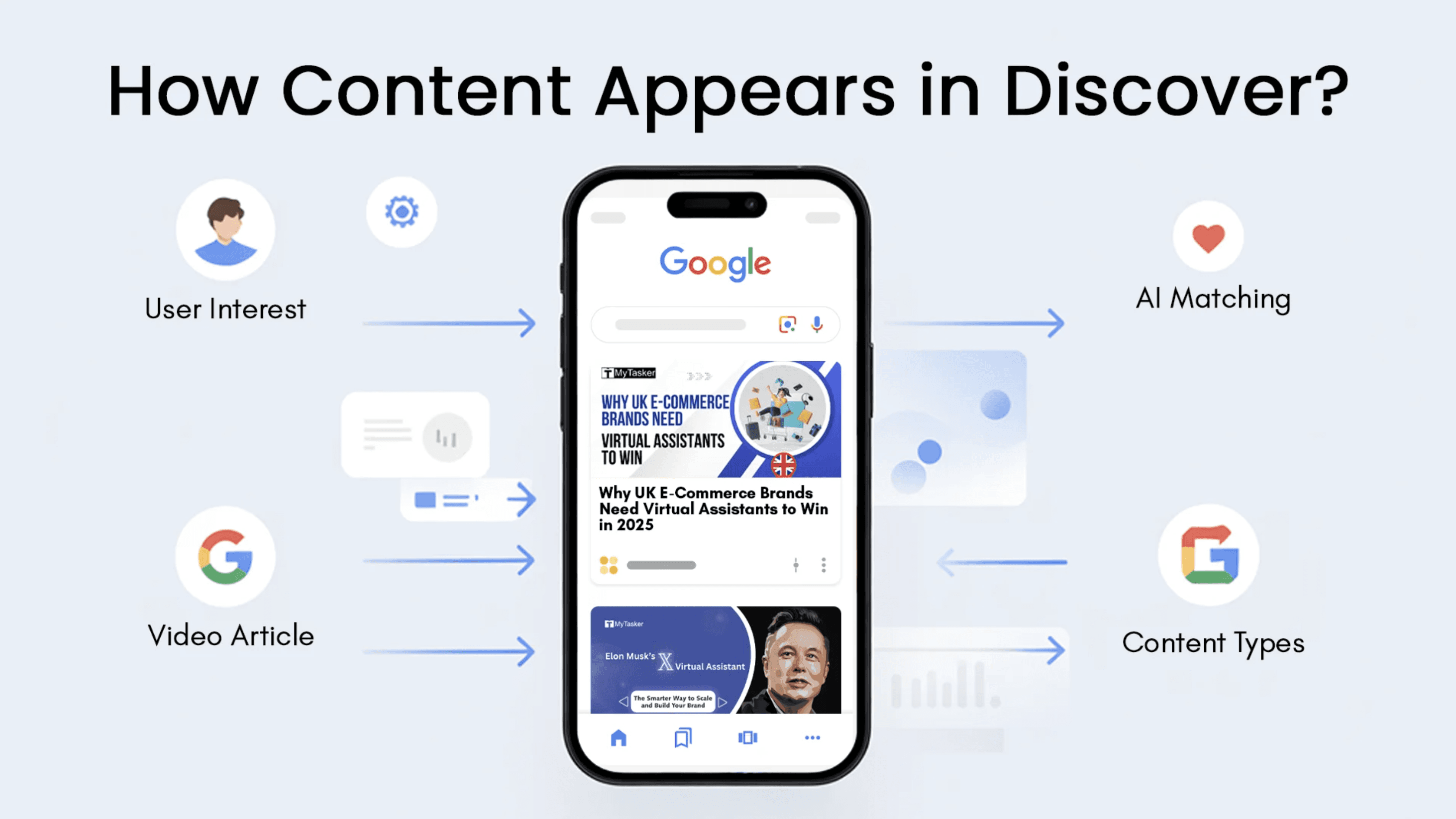
Source: https://mytasker.com/blog/understanding-google-discover-in-search-console
Available on both desktop and smartphone devices, Google Discover is a personalized newsfeed shown in the user’s browser. The feed is generated individually for each user, and once your content makes it into that feed, the magic begins:
-
organic mobile traffic that “comes on its own”;
-
an engaged audience that is already interested in your topic;
-
high CTR thanks to a native, editorial-style presentation.
For advertisers in some verticals, buying traffic directly through Google Ads or Meta is not easy: stricter ad policies, moderation issues, and account bans complicate the process. At the same time, organic content on the Google ecosystem can bring sudden bursts of high-quality mobile traffic if it’s made properly and doesn’t violate the rules.
Let’s break down, step by step, how to boost your articles on Google, increase your chances of appearing in Discover, and monetize mobile traffic.
Step 1. Find the right site
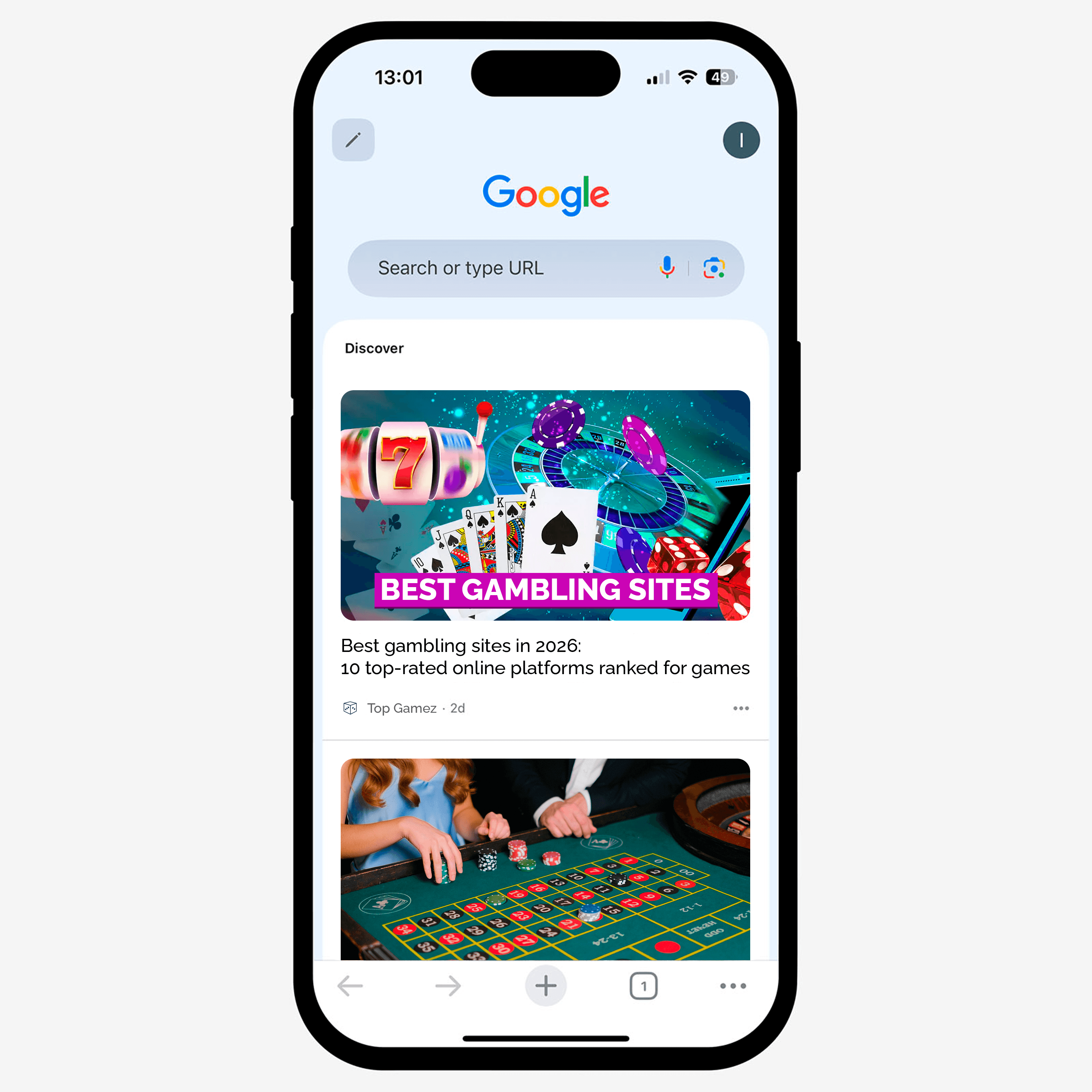
You don’t need a domain “from scratch” – search for an authoritative site that looks like a live, trustworthy resource for Google. The main signs of a well-established website:
-
100–500 real backlinks;
-
Domain Rating (or a similar authority metric) of about 20–40+;
-
domain age of at least 3 years.
Kirill T, the head of Product Operations Unit in our EVADAV Performance Agency, shares practical insights on how to find suitable domains that stand a much better chance of attracting relevant, converting traffic – not just any clicks.
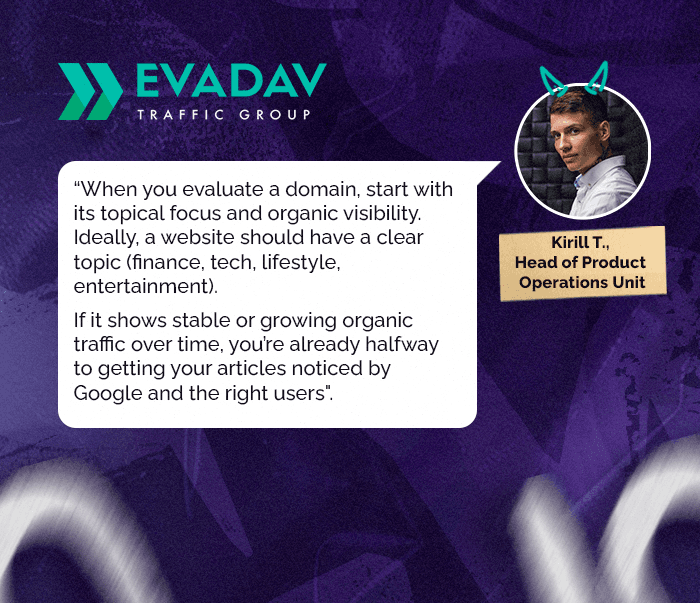
Start with the niche
Before you open a registrar or marketplace, define the target GEO (e.g., US, UK, DE, AU) and the vertical (e.g., Finance, Health, Home, Legal). Once this is clear, you’ll filter out 80% of irrelevant ideas and focus only on domains that can attract the right users.
Also, the domain must contain an intent keyword, not an abstract word, for example:
|
Good |
Bad |
|
bestmortgagerateshub.com petinsuranceguide.org seniorbenefitsdaily.com |
brightfuturehub.com nextlevelmedia.net |
Thus, both the algorithm and the user can instantly understand the topic, which boosts the visitor’s trust, click-through rate, and, consequently, page ranking.
The best-converting types of domains:
|
Intent + Guide |
Problem + Solution |
Trust words |
|
|
|
Criteria of a “good” domain
From a practical standpoint, a good domain name is short, readable, and clean. Ideally, it should be:
-
between 8 and 16 characters long
-
up to 20 characters
-
without hyphens
The choice of TLD also matters for conversion and trust. Top options are:
-
.com - top
-
.org - info/guides
-
.net - acceptable
-
.io - tech
-
.co - startups
-
.ai - AI
Avoid choosing .xyz, .top, or .site (unless it’s a strong brand) – they often appear less credible and may erode initial trust.
What else to avoid
-
brand infringement (Amazon, Google, etc.)
-
numbers in the domain
-
double letters like “xpresszz”
-
complex or hard-to-spell words
-
very local slang words if you target global traffic
Domain history
Before buying, always check what the domain was used for in the past. Use the Wayback Machine to review past snapshots and confirm they did not contain sensitive information or fall into restricted categories. Tools like Ahrefs or Semrush will help you review the backlink profile: assess the number and quality of backlinks, and consider a domain rating of 10+ acceptable, provided there are no obviously toxic links. Finally, run a quick index check in Google using site:domain.com. If the result is completely empty, the domain might be banned or have a serious history issue, and you should treat it with caution.
Where to search for domains?
Buy new domains on:
-
Namecheap
-
Dynadot
-
Porkbun
-
Cloudflare Registrar
Buy aged domains on:
-
ExpiredDomains.net
-
Odys Global
-
GoDaddy Auctions
-
DropCatch
🔎 Explore the topic further: What is Search Arbitrage? How Search Feed Arbitrage Works in 2026
Step 2. Place articles for your offer
Once you’ve gathered a list of relevant domains, take a closer look at what’s inside
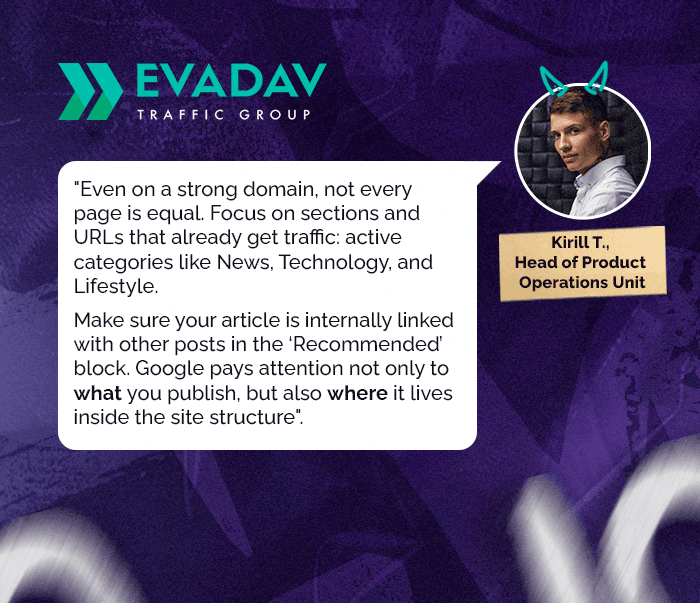
On the selected domain:
-
Publish pages that visually look like news or media articles. They should have a news/entertainment-style headline, an attractive cover, and a layout similar to a regular article (subheadings, paragraphs, quotes).
-
In the article, you describe your offer in detail, weaving it into the story and carefully placing the necessary links (to the landing page, pre-lander, quiz, or app). Links can appear in the text itself, as well as in blocks like “Recommended”, “Try now”, and so on.
-
Set up an RSS feed so that Google can pick up new content faster, and your content displays correctly in services that rely on RSS.
-
Ideally, also add Schema markup (author, date published, headline, image, etc.). This increases the chances that Google will recognize the piece as quality content rather than a low-value page.
Step 3. Optimize for E-E-A-T
Google is now paying close attention to E-E-A-T: Experience, Expertise, Authoritativeness, and Trust. Hence, you should:
-
name the article’s author and show a real (or at least believable) profile with a photo, a short bio, and a description of their experience in the topic;
-
add sources (links to open studies, news articles, official websites);
-
avoid turning the article into pure advertising and provide real value in the form of useful information.
Ideally, the topic of the article should naturally fall into popular Discover sections: “News”, “Technology”, “Entertainment”, “Lifestyle”, and so on. This makes it easier for the algorithms to match your content to user interests.
Step 4. Launch popunders to boost organic traffic
This is where EVADAV Ad Network comes in as a tool tailored for Discover.
What you need to do next:
-
Register with EVADAV Ad Network as an advertiser.
-
Create a Popunder campaign targeting your article URLs. EVADAV works with popunder traffic on CPM models and can deliver large volumes across 250+ countries, with up to 2 billion impressions per day.
-
Contact your account manager and state that your goal is specifically to get your articles into Google Discover. Provide your domains, URLs, GEOs, and verticals, and discuss the planned volumes.
Why do you need a manager in this setup? EVADAV already has experience with such cases and, importantly, we maintain pre-built white/black lists of sources and zones for different GEOs and verticals. We’ll also help you find the optimal CPM so you can quickly reach your desired volume without overpaying in the auction.
🎯Case: Unlocking hidden Google traffic
Volume and spend benchmarks
Our clients have different strategies depending on the number of target resources and GEOs. For a full-fledged campaign test, we recommend a minimum budget of $100 per day to obtain more reliable data. In practice, daily spend ranges from $120 to $4,000, with the average CPM across most Asian GEOs at around $0.40 (assuming sources are carefully selected).
When it comes to daily visits per article/domain, the benchmark is 100,000-500,000 visits per day. It varies by GEO, niche competition, and budget.
EVADAV provides large volumes of popunder traffic worldwide. You can drive premium traffic and leverage flexible auction models to control the pace of scaling through your bids.
Step 5. Track analytics and wait for hitting Discover
After launching the campaign, your job is to carefully monitor performance in Google Analytics (overall visits, on-page behavior, scroll depth, time on page, clicks on offer links) and Google Search Console (page indexing, impressions for brand and topical queries, and Google Discover impressions).
Usually, with a decent domain and solid content, an article gets into Google Discover within 1–2 weeks after you start actively boosting it with traffic. It’s important to:
-
not stop traffic before at least 14 days have passed;
-
give the algorithm time to analyze user behavior to ensure that the content is genuinely engaging.
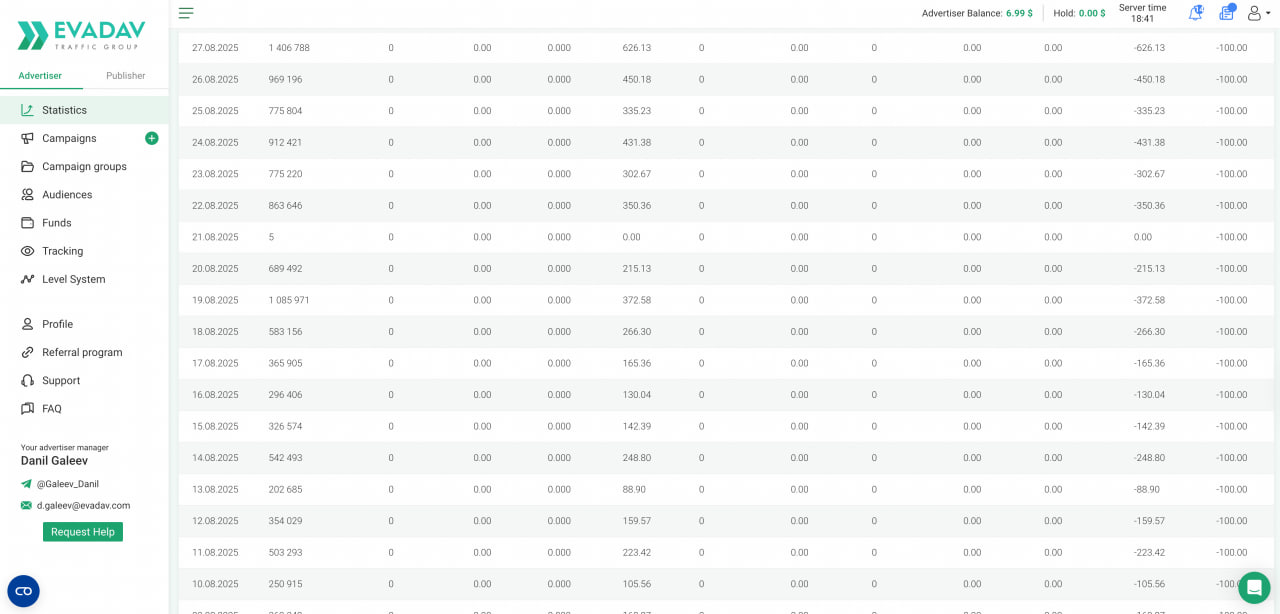
Here’s an example of view and revenue stats for an advertiser working with EVADAV Ad Network:
Step 6. Prepare new domains and pages in the meantime
While you’re waiting for the first results, you can start preparing for the next iteration:
-
select new trusted domains with similar parameters;
-
prepare additional articles for the same or related offers;
-
test different formats (news hooks, reviews, case studies).
This way, you’re not relying on a single shot but create a systematic flow of domains and pages that can get into Discover and bring you organic traffic in different directions.
Step 7. Repeat and scale
From here, the flow is simple:
Domain → Articles → Popunder traffic from EVADAV → Indexing → Discover → Organic traffic.
Look at the articles, topics, and GEOs that get the best response: analyze time on page, CTR in Discover (you can see this in GSC), and offer conversions. Then scale what works by increasing daily caps, expanding whitelists together with your manager, and cloning successful article formats onto new domains.
Why EVADAV is a top choice for popunders and Google Discover?
For advertisers and mediabuyers, our ad network provides:
-
Essential functionality: quality placements, flexible targeting and campaign settings, and advanced optimization algorithms.
-
Quality sources are pre-vetted for conversion and quality, with much higher CR – you just need to match them to your offer and domains.
-
Ready-made white/black lists for verticals and GEOs. We share curated setups with successful Discover cases.
-
Flexibility in buying models (CPM, Smart CPM, CPC).
-
Support of other ad formats (native, in-page, push) if you want to test additional approaches for warming up and remarketing.
Finally, we guarantee 24/7 support and assistance from a personal manager. You will get recommendations at every stage of your ad campaign.